
Stop the source
Close the main water valve, or the leaking fixture's valve, only if you can reach it safely.
Need a water damage restoration company after a leak, burst pipe or flood? Call 833-877-1717 with the property ZIP code, what got wet and whether water is still entering. RepairNowUSA checks for a possible connection to an independent provider. Water damage restoration services can include water removal, cleaning and structural drying; source repair and rebuilding may need separate specialists. Stay away from wet electrical equipment and unsafe areas. The provider confirms availability, scope, timing and price.
If the water is still coming in, start with the source: burst pipe, roof leak or appliance leak. Sewage or flood water is a different, more hazardous category: see sewage backup or flood cleanup.
RepairNowUSA editorial review · Last substantively reviewed October 29, 2026 · Review standards
Keep away from wet electrical equipment and unsafe damaged areas. Do not enter standing water to reach the electrical panel.
Close the main water valve, or the leaking fixture's valve, only if you can reach it safely.
Do not approach a wet panel or operate switches while standing in water. If reaching the main switch requires entering water, call an electrician.
Only when the area is safe, photograph damage and move dry, reachable belongings away from the leak. Do not enter contaminated water or an unsafe area to rescue possessions.
Tell the provider where the water came from and let them assess contamination. Do not assume water is safe because it looks clear. Sewage and outside floodwater can contain harmful substances: avoid contact, keep children and pets away, and ask qualified professionals about cleanup.
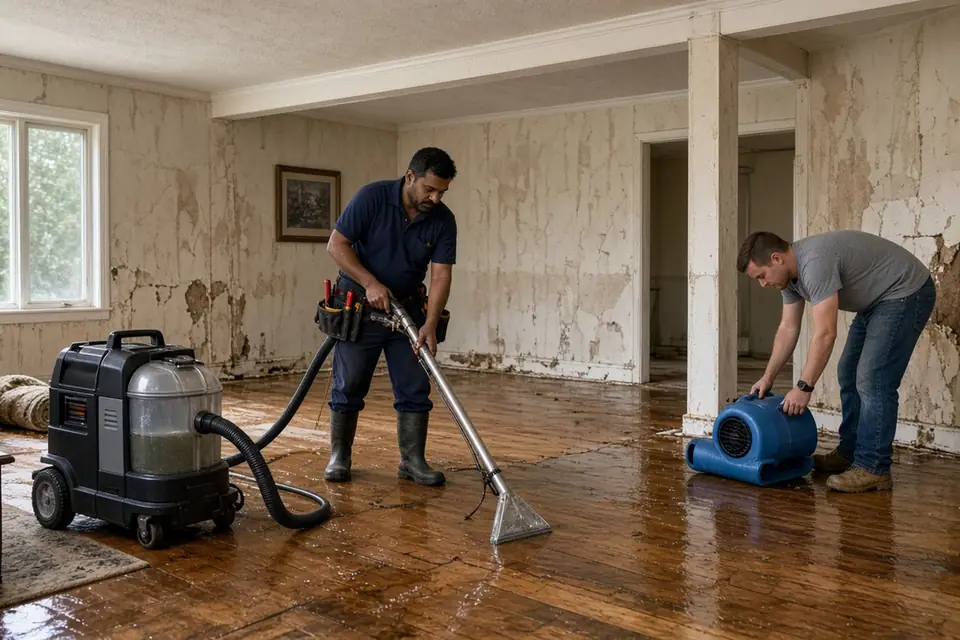
Pumping and vacuuming standing water from floors, carpet and basements. See water extraction.
Drying equipment and moisture checks address water held in walls and subfloors. Equipment and cleanup depend on the water source and contamination. See structural drying.
Wet drywall, insulation, carpet pad and flooring need inspection. Ask what can be dried in place, what must be removed, and who will repair the finishes.
Water from above can collect in a ceiling. See ceiling water damage.
Removes water, dries and monitors moisture, and documents the loss. Rebuilding drywall or flooring may be a later, separate step.
Fixes whatever let the water in. If the source is still active, say so on the call so both needs can be routed.
Ask for the moisture records and the condition that must be met before rebuilding begins. Confirm which company handles each stage, whether contents and odor treatment are included, and whether wall, floor and ceiling repairs need a separate written estimate.
More on each step: water extraction, structural drying, water-damaged drywall repair and ceiling water damage. Fixing the source is a separate job: a burst pipe, slab leak, roof leak or appliance leak needs a plumber, roofer or appliance technician.
For basement water after a pump failure, see basement water removal and sump pump repair. Removing water and repairing the pump may be separate jobs.
Stains, bubbling or peeling paint, soft or sagging drywall, and a ceiling that feels damp or bulges.
Cupping or buckling hardwood, lifting vinyl, loose tiles, or carpet that stays damp or smells.
A musty odor that does not go away, or rising humidity in one room, can mean water is trapped inside walls or under floors.
A water bill that jumps, or a meter that moves when nothing is running, points to a hidden leak.
RepairNowUSA does not set prices. Ask the independent provider to separate source repair, extraction, drying equipment and monitoring, material removal, cleaning and rebuilding in the written estimate. Confirm any equipment-day charges and exclusions before authorizing work.
Standard homeowners policies often cover sudden, accidental water damage, such as a burst pipe, but often exclude gradual leaks and outside flooding. Flood damage generally needs a separate flood policy, such as one from the National Flood Insurance Program. Your policy decides coverage, exclusions and deductibles. Contact your insurer or agent early. From a safe location, photograph damage before cleanup and keep receipts. Keep material samples only when safe; document and discard items that pose health risks rather than saving them solely for inspection.
RepairNowUSA is a referral and connection service. Provider availability and response times vary by location, time and demand, and are not guaranteed. Before you approve work, ask what was found, the price, the timing and what is not included.
Call 833-877-1717Quickly. U.S. EPA guidance is to dry wet materials within 24 to 48 hours to help prevent mold. The sooner drying starts, the more can usually be saved.
Water mitigation limits further damage through actions such as removal and drying. Restoration addresses cleanup and recovery after the water loss. Repair or rebuilding restores damaged finishes and components. Companies use these terms differently, so ask which stages are included in the written scope and who repairs the original leak.
It depends on how large the wet area is, the type of water, how long it sat and what has to be replaced. The independent provider gives the estimate after an inspection. RepairNowUSA does not set prices.
Drying often takes several days and is confirmed with moisture readings. Rebuilding can take longer, depending on the materials and permits.
Yes. You can call 833-877-1717 at any time, including nights, weekends and holidays. Whether an independent provider can come out right away depends on your ZIP code, the time and provider capacity, so availability is not guaranteed.
Do not use fans if mold is visible; they can spread it. Use electrical equipment only when it is safe. For a small spill on a hard floor, maybe. Water that has soaked carpet pad, drywall or subfloor usually needs professional extraction, dehumidifiers and moisture readings to confirm it is dry inside.
It depends on the water source, how long it sat, and the materials. Some materials may be saved after inspection and moisture assessment. Sewage-contaminated porous materials are usually removed.
Often for sudden, accidental damage such as a burst pipe, but usually not gradual leaks or outside flooding, which generally needs a separate flood policy. RepairNowUSA cannot answer for your policy. Photograph the damage, keep receipts, and contact your insurer or agent early.
RepairNowUSA accepts requests for a possible independent-provider connection using the property ZIP code and repair need. It does not perform restoration or operate a local repair office in every city. Availability depends on the location, service, timing and provider capacity. You can start a ZIP-based service request; the online form does not display live provider availability or guarantee a connection.
Confirm the company name and who will attend the property. Ask about experience with your water source, relevant training, insurance and any claimed IICRC Certified Firm status. Verify credentials rather than assuming a referral guarantees them. Request a written scope covering moisture checks, equipment charges, material removal and completion records; clarify who handles source repair and rebuilding. The independent provider sets the terms, and you choose whether to authorize work.
Depending on the loss and written scope, work may include water extraction, removal of unsalvageable materials, structural drying, moisture monitoring and appropriate cleaning. Ask whether contents care, any proposed treatments and rebuilding are included or require another contractor.
If floodwater affected the HVAC system or air ducts, keep it off until a qualified professional says it is safe. A contaminated system can spread pollutants through the building. EPA advises completing cleanup, drying and needed repairs or remediation before restarting the system. A musty smell alone does not establish which equipment is contaminated.
From a safe location, take wide and close-up photos or video of damaged rooms and belongings before cleanup or disposal. Record appliance serial numbers when safely accessible, and keep receipts for emergency work. Keep material samples only when safe; do not retain hazardous items solely for inspection. Ask your insurer about its documentation requirements.
For an NFIP flood claim, speak with your agent or adjuster before signing a cleaning or maintenance contract. For other losses, ask your own insurer about its requirements. Ask the independent provider to explain the work, price and exclusions in writing. Coverage and claim procedures depend on the policy; RepairNowUSA cannot promise an insurance outcome.
These public sources give general safety context. They do not replace an on-site evaluation, and RepairNowUSA does not perform the work.