
Stop all water use
Do not flush, shower, run the dishwasher or washing machine. Everything drains toward the blockage and comes back up.
Sewage coming up through drains, toilets or floor drains is a health hazard. A sewer backup can come from a blocked drain or sewer line, a septic problem or an overloaded public sewer. Stop using water, keep everyone away from it and from any water near electricity, and call 833-877-1717. RepairNowUSA connects the request. Independent plumbers and cleanup crews do the work.
A sewer backup may need two separate services: a plumber, drain or septic professional to address the cause, such as a main sewer line clog, and a cleanup provider to remove contaminated water and materials, clean and dry the area. Say whether you need both; availability may differ for each service.
RepairNowUSA editorial review · Last substantively reviewed October 29, 2026 · Review standards
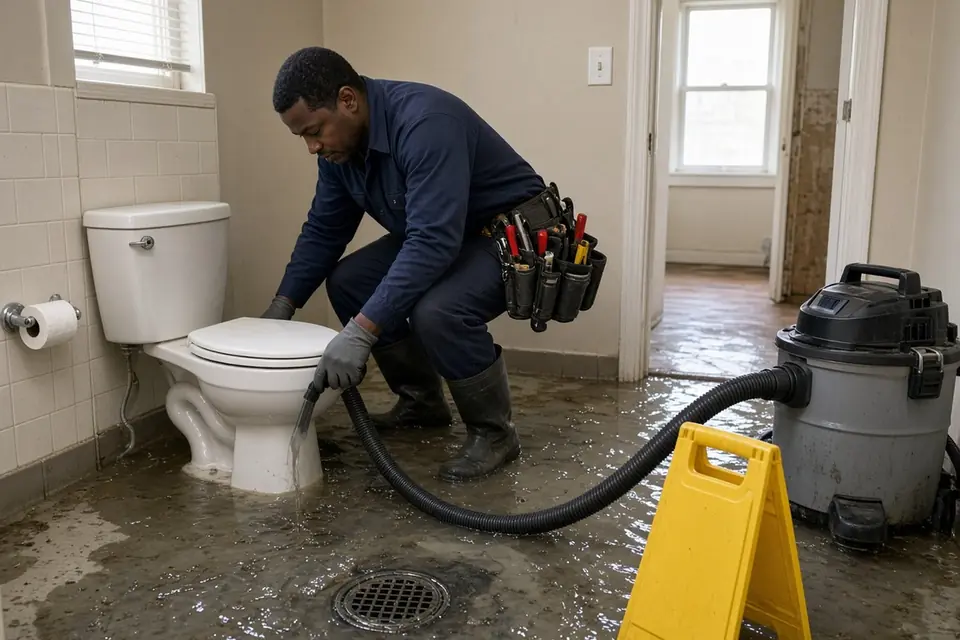
Do not flush, shower, run the dishwasher or washing machine. Everything drains toward the blockage and comes back up.
Keep children, pets and vulnerable occupants away. Do not enter sewage-contaminated areas; request professional cleanup.
If sewage is near outlets or appliances, switch off those circuits only if you can reach the panel from a dry floor. Never step into the water to reach it; otherwise stay out and say so on the call.
Sewage carries bacteria and viruses. Do not mix cleaning chemicals, especially bleach and ammonia, which create toxic gas. Porous items it touched, such as carpet, pad and upholstery, often have to be removed; the cleanup professional decides what can be saved. If you smell gas, leave and call 911 or the gas utility.
Grease, wipes or other items lodged in the main line. Several drains back up at once, lowest drains first.
Roots enter older clay or cast-iron lines through joints. See tree root sewer line removal.
Collapsed or offset pipe needs sewer line repair, sometimes after a camera inspection.
During storms, municipal sewers can back up into buildings. A backwater valve can help prevent it in the future.
A full or failing septic tank, or ground soaked by heavy rain, can push wastewater back into the building. A septic professional finds the cause.
If only one fixture backs up, the clog may be in that drain alone. See clogged drain repair.
Clears the blockage, often from a cleanout, and may camera-inspect the line to find the cause. On septic properties, a septic professional may be needed.
Removes contaminated water and materials, disinfects, and dries the area. Tell the operator both are needed.
RepairNowUSA is a referral and connection service. Provider availability and response times vary by location, time and demand, and are not guaranteed. Before you approve work, ask what was found, the price, the timing and what is not included.
Call 833-877-1717Yes. It is a health hazard and gets worse every time water is used. Stop all water use and call 833-877-1717.
Yes. You can call 833-877-1717 at any time, including nights, weekends and holidays. Whether an independent provider can come out right away depends on your ZIP code, the time and provider capacity, so availability is not guaranteed.
Use an experienced sewage cleanup professional. Keep people away from contaminated water and materials; clearing the drain does not complete contamination cleanup.
The basement drain is usually the lowest opening in the system, so a blockage in the main line shows up there first.
It depends on where the problem is and on local rules. Owners are often responsible for the line from the building to the public sewer, but ask your sewer utility or public works office where your responsibility ends. If several neighbors have backups, contact your sewer utility.
RepairNowUSA cannot answer for your policy. Many policies need a specific sewer or water backup endorsement. Photograph everything and contact your insurer or agent.
No. Restoring drain flow and cleaning contaminated rooms are different scopes. Ask who will remove affected materials, clean the area and document drying, and whether those tasks are included in the estimate. Tell RepairNowUSA if both plumbing and sewage cleanup are needed.
Crews wear protective equipment, remove the sewage, remove porous materials like carpet and drywall that cannot be cleaned, clean and disinfect hard surfaces, and dry the area. Sewage is treated as a biohazard, so do-it-yourself cleanup is not recommended.
Yes. Heavy rain and flooding can overload public sewers and stop septic systems from draining. A backup is not proof that your own sewer line is clogged. Limit water use and let a plumber, septic professional or your utility find the cause.
Stay out of the affected area and do not touch electrical equipment or operate its controls. Ask the utility or qualified personnel to isolate power; leave and call 911 for smoke, sparks, an unexplained burning odor or immediate danger.
Not usually. A plumber may get the drains working again, but contaminated water and materials still need safe removal, cleaning and drying by a cleanup professional. Ask each independent provider which part they handle.
Do not run equipment that sewage or floodwater reached until a professional has checked it. Mention any affected furnace, air handler or ducts on the call.
Give the property ZIP code, where the backup appeared, whether it is still happening, which units or common areas are affected and any safety concerns. The independent provider confirms availability, scope, schedule and price.
These public sources give general safety context. They do not replace an on-site evaluation, and RepairNowUSA does not perform the work.