
Catch and contain
Buckets, towels and plastic sheeting under the drip. Move furniture, electronics and rugs out of the way.
A roof leak lets rain into the attic, ceilings and walls, and the stain indoors is often far from the actual hole. Protect people and belongings, stay off the roof, then call 833-877-1717 for roof leak repair. RepairNowUSA connects the request. An independent roofer does the repair.
Roof opened by wind, hail or a tree: emergency roof repair or emergency roof tarping. Water only from the ceiling and not related to rain: ceiling water damage.
RepairNowUSA editorial review · Last substantively reviewed October 18, 2026 · Review standards
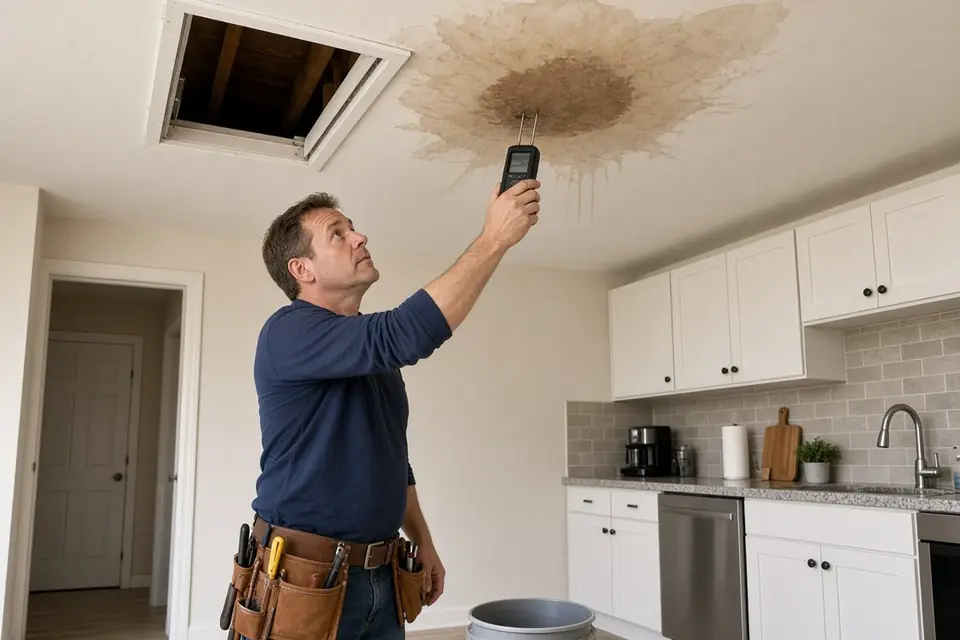
Buckets, towels and plastic sheeting under the drip. Move furniture, electronics and rugs out of the way.
If it bulges, keep everyone out of the room. Stay away from any wet light fixture. Turn it off at the breaker only if the panel and the floor around it are completely dry; otherwise leave it and say so on the call.
Do not climb into a wet attic to find the leak. If you can see in from the hatch without going in, note any dripping, wet insulation or daylight and tell the roofer.
Take photos and video inside and from the ground outside. They help the roofer and any insurance claim.
Wet and storm-damaged roofs are where serious falls happen. Do not climb onto the roof, especially in rain, wind or lightning. A roofer has fall protection and can judge whether the deck is safe.
Around chimneys, skylights, walls and valleys. See roof flashing repair.
Cracked rubber seals around plumbing vents. See roof vent repair.
Wind or hail damage exposes the underlayment. See wind damage and hail damage.
Ponding water and membrane seams. See flat roof repair.
Clogged gutters can back water up under the roof edge. In freezing weather, ice along the edge can force meltwater under shingles. See leaking gutter repair.
Where a roof meets a wall or dormer, the flashing can fail. Old nail holes and removed dish mounts or vents can also let water in. See skylight leak repair for leaks around skylights.
Finds the entry point, makes a temporary or permanent repair, and checks surrounding flashing and decking. A tarp or temporary patch only slows the water until the permanent repair, which may be a separate visit.
Wet insulation, drywall and ceilings need to dry or be replaced. Mention interior damage so water damage restoration can be arranged.
RepairNowUSA is a referral and connection service. Provider availability and response times vary by location, time and demand, and are not guaranteed. Before you approve work, ask what was found, the price, the timing and what is not included.
Call 833-877-1717Move people and valuables away, put a bucket under the drip and protect floors. If the ceiling is bulging, keep people out of the room. Stay away from wet light fixtures; turn them off at the breaker only if the panel and the floor around it are completely dry. Then call 833-877-1717.
Providers usually cannot work safely on a roof during heavy rain, lightning or high wind. They may be able to provide temporary protection once conditions allow.
Yes. You can call 833-877-1717 at any time, including nights, weekends and holidays. Whether an independent provider can come out right away depends on your ZIP code, the time and provider capacity, so availability is not guaranteed.
Water runs along rafters, decking and pipes before it drips. The roofer traces it back from the attic and the roof surface.
Many leaks can be repaired without replacing the roof, but only an inspection can tell. Widespread damage or an old, failing roof may need replacement. The roofer explains the options.
RepairNowUSA cannot answer for your policy. Storm damage is often treated differently from wear and age. Photograph the damage and contact your insurer or agent, and ask whether there is a deadline for reporting it.
The roofer traces the leak from the attic and the roof surface, then repairs the cause: replacing damaged or missing shingles, resealing flashing around chimneys and vents, replacing a cracked pipe boot or repairing the deck. Many leaks can be fixed without replacing the whole roof.
Roofers usually will not go up during lightning or high wind. Call 833-877-1717 to get in line, catch the water inside, and ask for an emergency tarp as soon as conditions are safe. Urgent roof repairs often start as a tarp and finish once the weather clears.
No. A tarp or temporary cover can reduce more water getting in until a roofer can make the permanent repair. Whether a tarp can go on safely depends on the weather, the roof and provider availability.
Bubbling or peeling paint, ceiling stains and a damp or musty attic can be signs of moisture from a roof leak, but they do not prove the source. Note when and where you noticed them and tell the independent provider.
Contact the company that installed it and look over any workmanship or product warranty papers. Whether a leak is covered depends on the warranty and the cause. RepairNowUSA cannot say what a warranty covers.
Yes. A plumbing line, an HVAC drain or a window can also cause ceiling water. Note whether it only appears during rain and mention any pipes or equipment above the spot. If it is not rain-related, see ceiling water damage.
These public sources give general safety context. They do not replace an on-site evaluation, and RepairNowUSA does not perform the work.