
Do not disturb it
Scrubbing or tearing out moldy materials spreads spores. Leave larger areas to professionals.
Mold grows where moisture stays. Mold remediation removes the mold safely; fixing the leak or moisture that caused it may need a separate trade. Do not disturb large areas yourself; call 833-877-1717. RepairNowUSA connects the request. An independent remediation company does the work.
Still wet from a leak: structural drying. Business properties: commercial mold remediation.
RepairNowUSA editorial review · Last substantively reviewed October 18, 2026 · Review standards
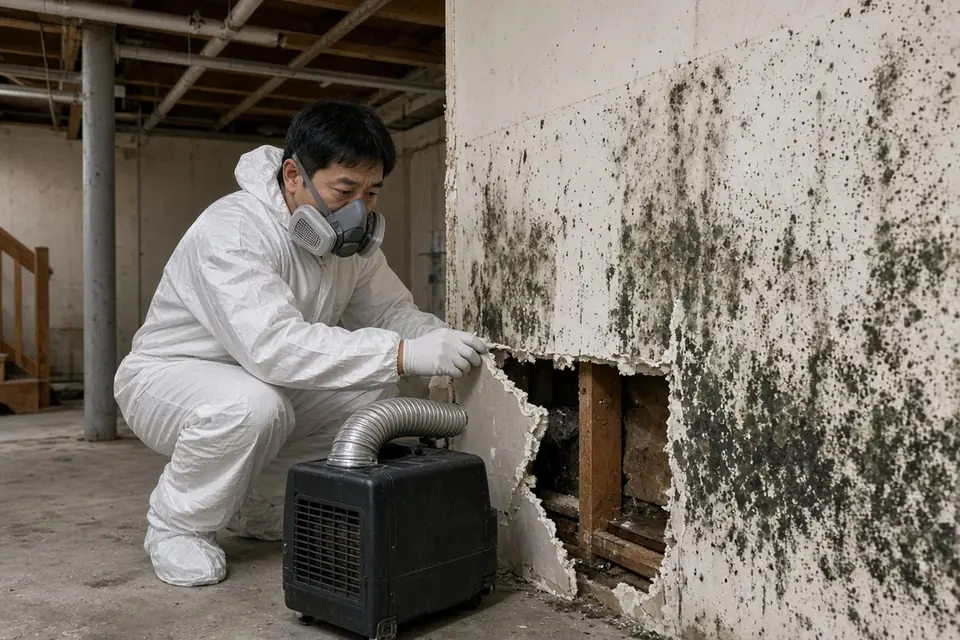
Scrubbing or tearing out moldy materials spreads spores. Leave larger areas to professionals.
If it is safe, stop an active leak and lower humidity. Mold is likely to come back if the moisture stays.
Keep doors shut and limit time in the room, especially for sensitive people.
EPA treats area as one factor, not a safety guarantee. Sewage contamination, major water damage, hidden growth or HVAC involvement require experienced help. Do not run suspected contaminated HVAC. People with health concerns should consult a health professional before cleanup.
Behind drywall, under flooring and in cabinets.
Poor ventilation and repeated moisture.
Roof leaks, poor venting or groundwater.
Ducts and drain pans with condensation.
The independent provider decides the actual steps after seeing the property.
RepairNowUSA is a referral and connection service. Provider availability and response times vary by location, time and demand, and are not guaranteed. Before you approve work, ask what was found, the price, the timing and what is not included.
Call 833-877-1717Area alone does not establish safe DIY cleanup. Follow EPA qualifications; use experienced professionals for sewage, major water damage, hidden growth or HVAC contamination, and consult a health professional about health concerns.
Drying clean-water damage promptly, ideally within 24–48 hours, helps reduce mold risk. This is a prevention target, not a guaranteed time before growth; contamination and hidden moisture require professional assessment.
Not usually when mold is visible. EPA says sampling is usually unnecessary if you can see mold growth. Testing can help in some cases, such as suspected hidden mold. There are no federal safe levels for mold, so a test result alone does not prove a building is safe.
EPA advises using its larger-remediation guidance and an experienced contractor when mold covers more than about 10 square feet, or after significant water damage.
Yes. You can call 833-877-1717 at any time, including nights, weekends and holidays. Whether an independent provider can come out right away depends on your ZIP code, the time and provider capacity, so availability is not guaranteed.
Only if the moisture problem is fixed too, and new leaks can still cause new mold. The remediation provider should identify the moisture source; a plumber or roofer may need to fix it.
Ask whether they follow the IICRC S520 standard or EPA guidance, use containment and HEPA filtration, find and fix the moisture source, and offer clearance testing afterward. Be careful with any company that both tests and remediates without independent checks. EPA does not certify mold remediation companies, so also ask about training, experience, any state license and a written scope.
The terms are used loosely. Mold mitigation often means containing and limiting the spread, while remediation means removing the growth and the damaged materials and returning the area to normal. Mold abatement is another name used by some companies.
No. EPA advises not running a heating or cooling system you know or suspect has mold, because it can spread mold through the building. Tell the provider where you think the mold is.
Not always. Porous materials can hold mold inside them and may need to be removed and replaced. Do not tear out large areas yourself; the provider decides what can be cleaned.
Stay away from the contaminated materials and mention both the backup and the mold on the call. EPA advises a professional experienced with sewage or other contaminated water. See sewage backup cleanup.
No. EPA does not recommend bleach as routine mold cleanup. Dead mold can still cause reactions, so it has to be removed, and the moisture fixed. Never mix bleach with ammonia or other cleaners.
Possibly. Stopping a plumbing or roof leak, drying, mold removal and rebuilding can be different jobs. Describe the whole situation when you call 833-877-1717; each independent provider sets its own scope and price.
These public sources give general safety context. They do not replace an on-site evaluation, and RepairNowUSA does not perform the work.